Children’s play has increasingly shifted indoors and onto screens, reducing opportunities for physical movement and peer interaction. This project responds to this everyday reality by rethinking how play can happen in real spaces, through the body, and with others.
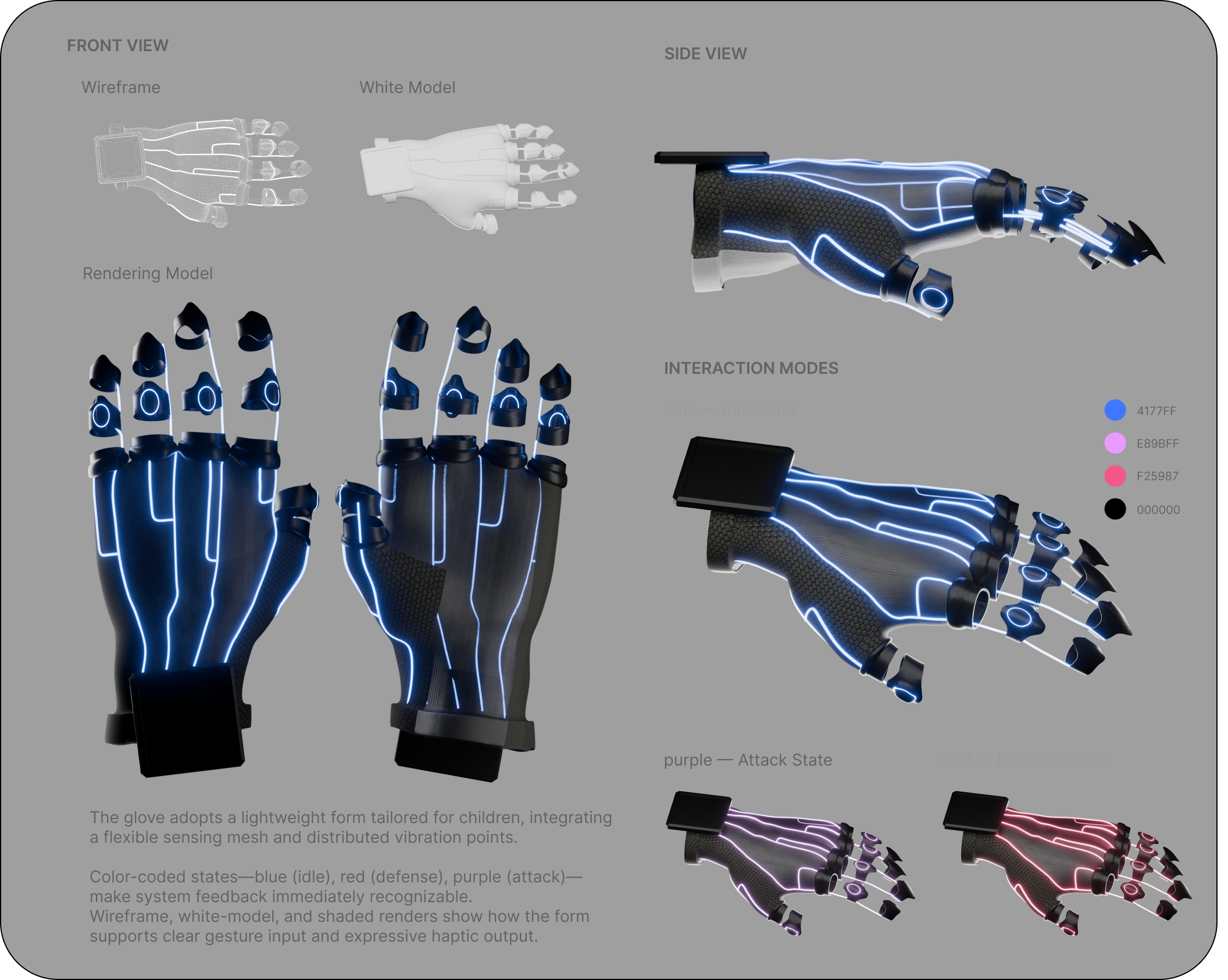
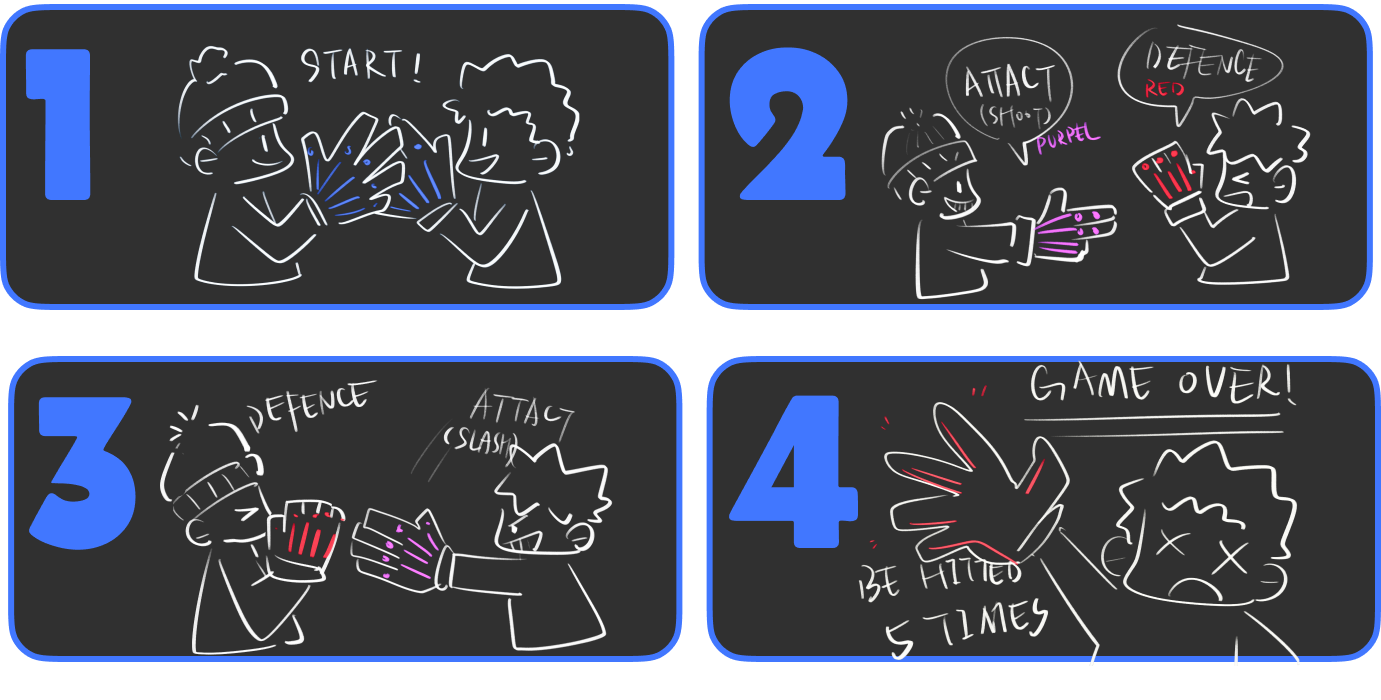
At the center of the project is a lightweight, wearable interactive glove that translates hand gestures into simple game actions. Instead of focusing on screens, the system encourages children to run, react, and play face to face, using movement as the core interaction.
By combining wearable technology, gesture-based input, and multiplayer play mechanics, the project explores a hybrid form of play—one that sits between digital games and outdoor activity—aiming to support children’s physical engagement, social connection, and freedom to play in the real world.
BACKGROUND
In recent years, especially after COVID19, urban children’s daily life has shifted from outdoor play with peers to more indoor, screen-based activities: outdoor exercise time has declined while hours spent on phones/tablets and games have risen.
At the same time, opportunities for face-to-face social interaction have decreased and digital or passive entertainment fills the gap. This trend is driven by multiple factors—parental supervision patterns, school schedules, limited community play space, and the strong pull of digital content.
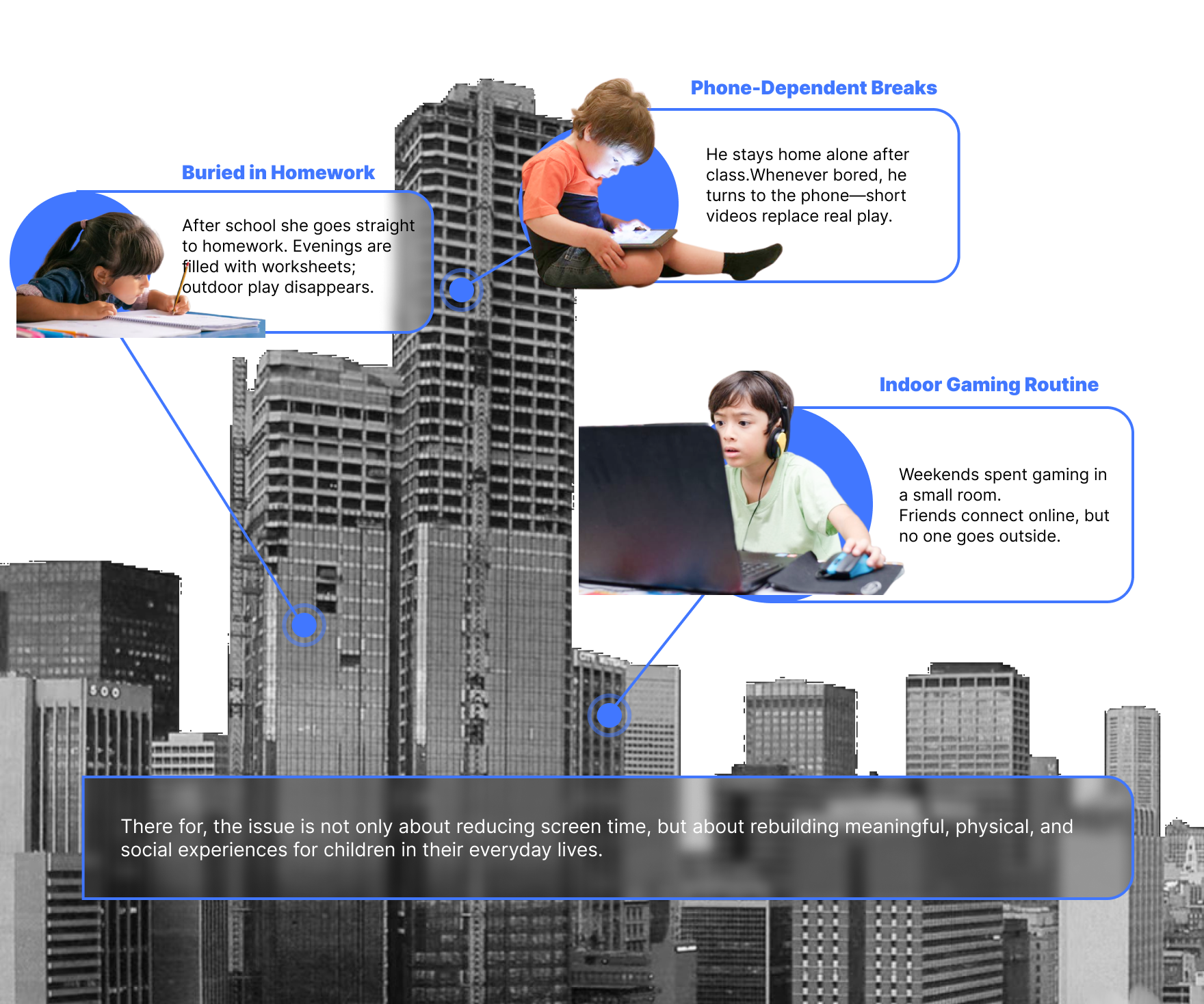
There for, the issue is not only about reducing screen time, but about rebuilding meaningful, physical, and social experiences for children in their everyday lives.
RESEARCH
Children’s Outdoor Play and Physical Activity Decline
· Children’s outdoor playtime has sharply declined while digital entertainment increasingly replaces physical and social play.

Rising Screen Exposure in Early Childhood

Motivators of Active Play

Questionnaire
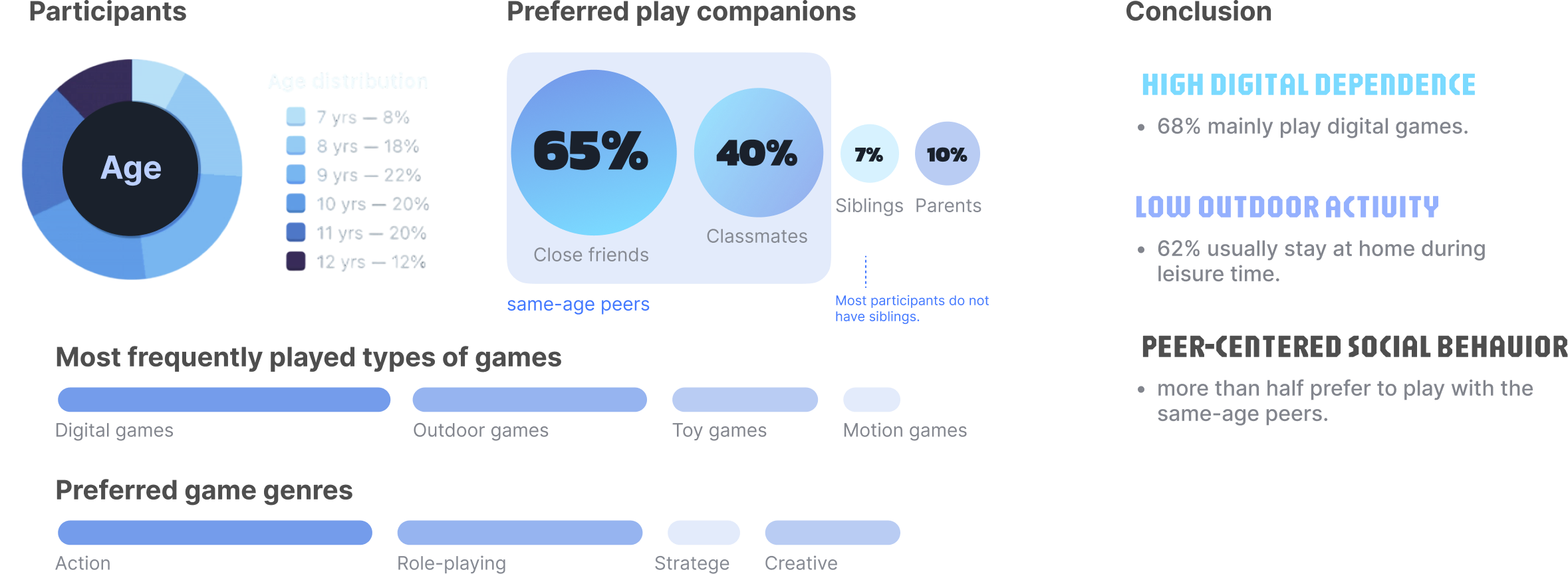
This survey aims to understand gaming preferences, social interaction patterns, and outdoor activity habits among children aged 7–12, serving as a basis for the design of an immersive gesture-interactive glove game.
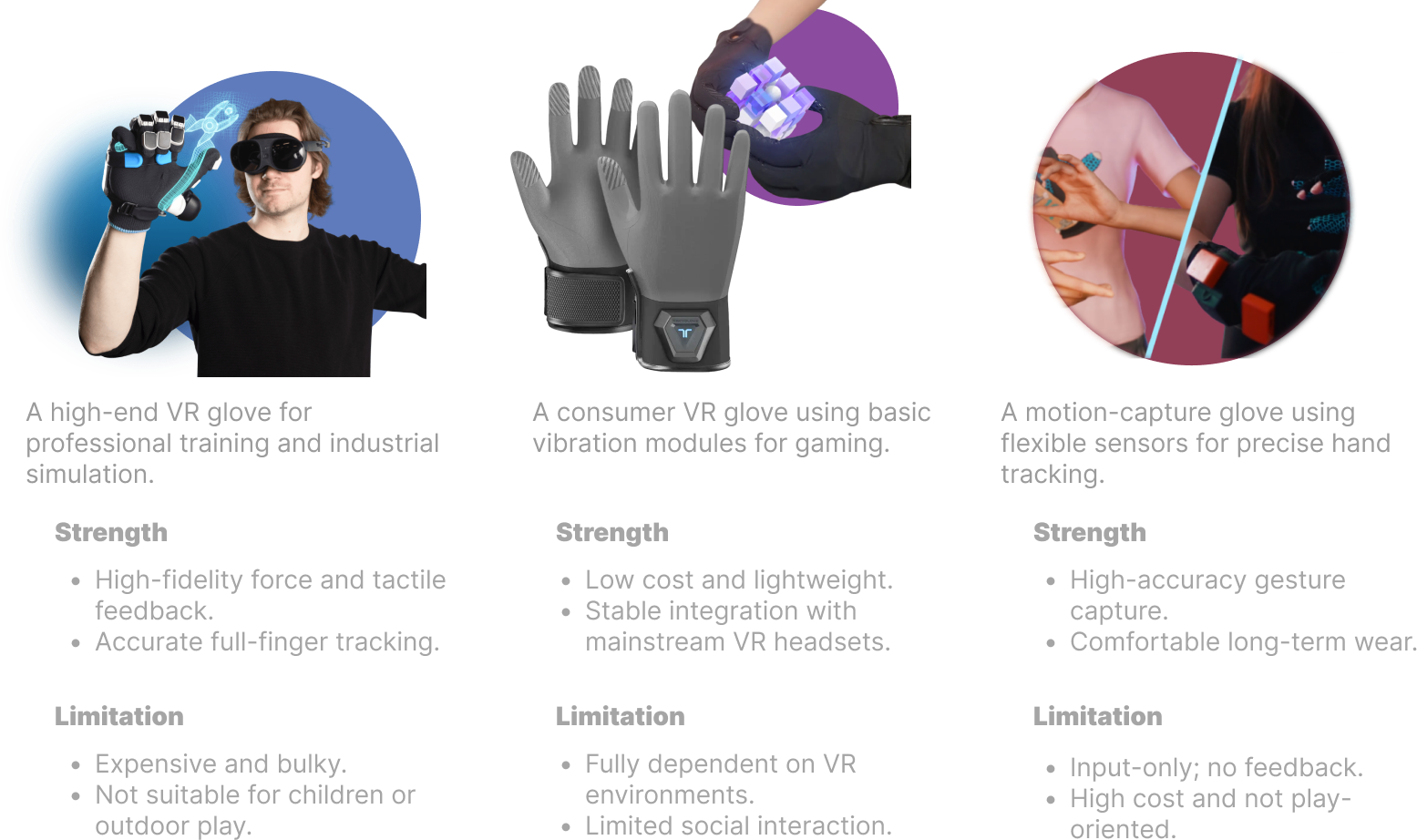
Competitive Analysis
MY PRODUCT
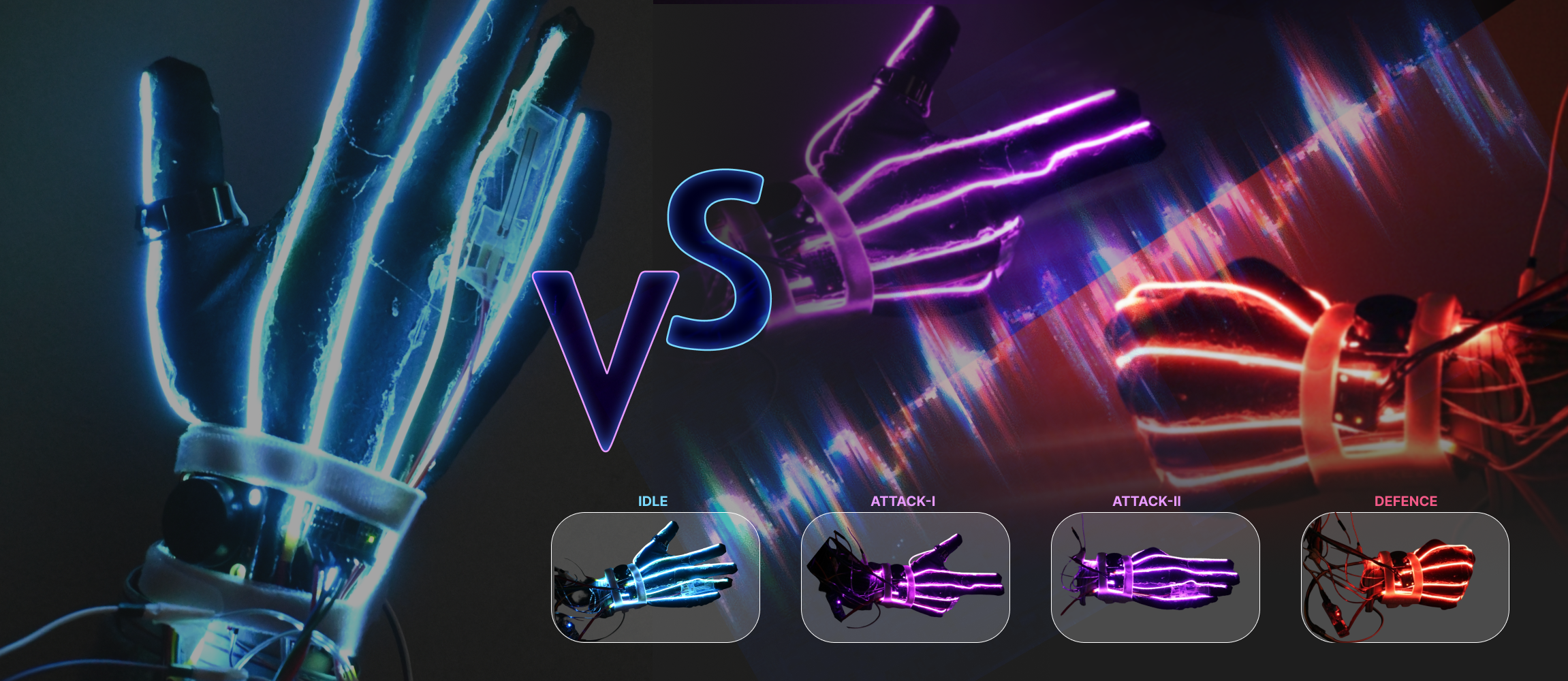
Design Concept
Children relate to the world through movement—running, touching, chasing, forming a direct dialogue between body and environment. Today, much of this physical connection has been displaced by screens.
design purpose
By enabling gesture-based multiplayer play in real environments, the glove restores the excitement of physical action and the social presence of peers.
It is neither a return to traditional outdoor play nor a retreat into digital immersion, but a recalibration between body, technology, and social interaction—allowing play to re-emerge in the physical world.
process
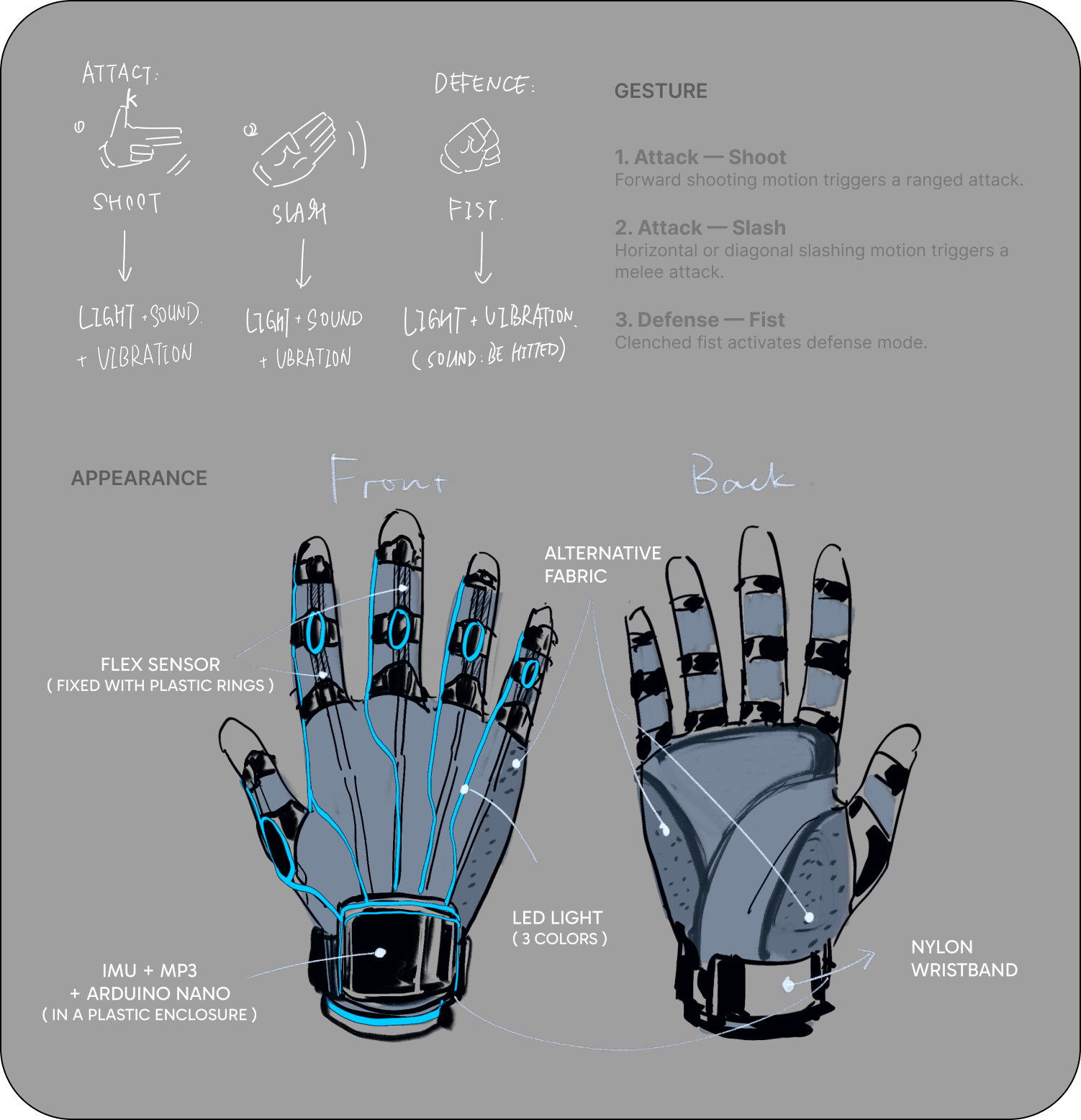


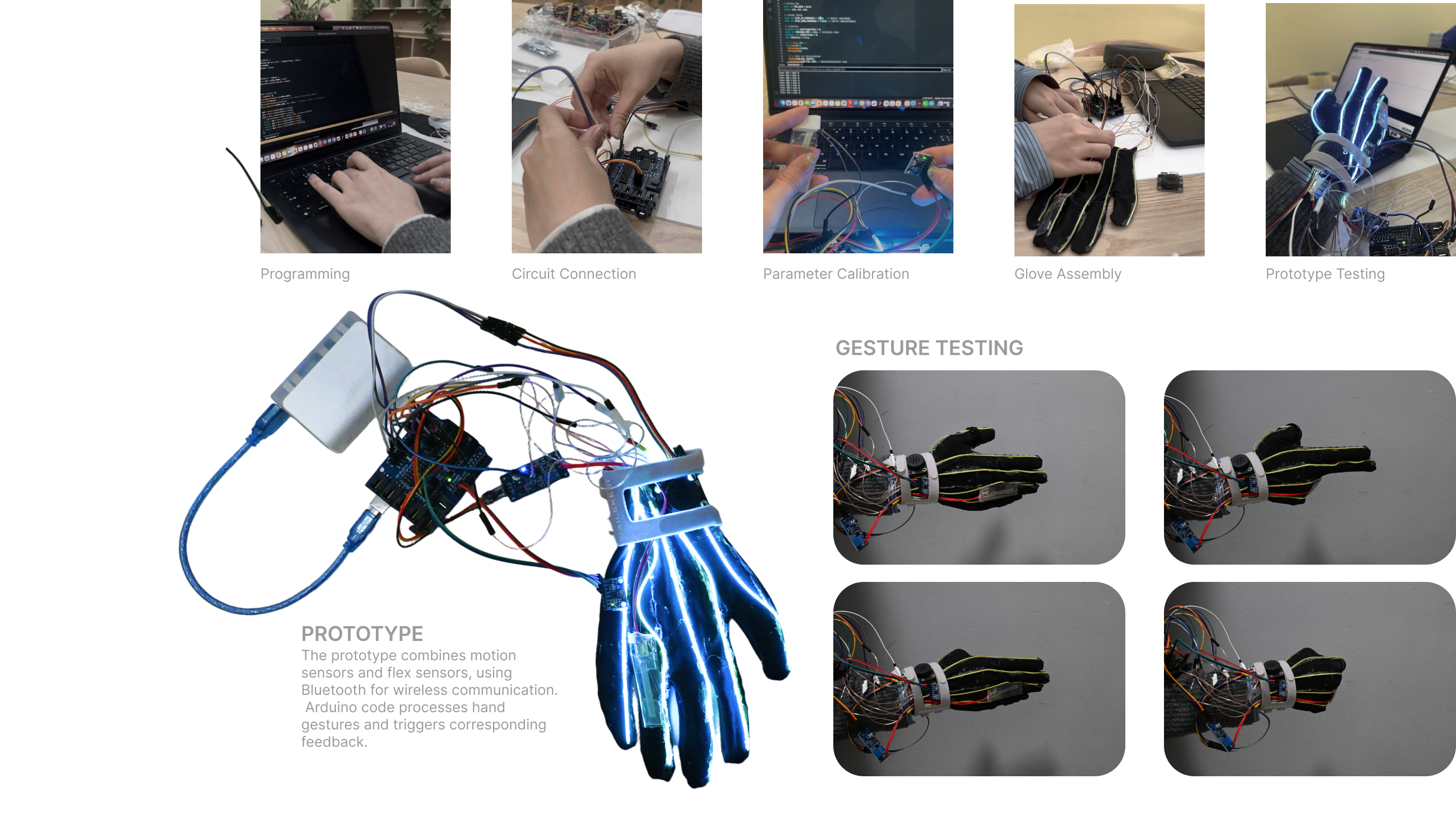
The hardware development followed a systematic process, integrating both software and physical components. The steps involved are: