Project Resonance
An interactive system that translates crystal morphology into generative sound and embodied audiovisual experiences. | Date: 2025/08
As human exploration extends beyond Earth, space gradually shifts from a destination to a place of everyday living. Over long durations and vast distances, human experiences become harder to share, preserve, and feel.Memories and emotional traces no longer leave stable marks, and what it means to remember—individually and collectively—begins to change.
Project Resonance explores crystals as designed objects that carry human traces. Rather than treating memory as data to be archived, the project investigates how memory might become material, perceptible, and slow.
Team Project:Chen Kehan|Jiang Yuhan|Ding Shanshan|ZhangXinxin|Sun Yucong
My Role:
Part 1: Programming & hardware assembly
Part 2: Full concept, design, and implementation
BACKGROUND
Technology Trends
In recent years, deep space exploration has entered a new phase, marked by collaboration between nation-states and private capital to build infrastructure from Earth’s orbit to deep space. Programs such as NASA’s Artemis lunar return, China’s Deep Space Exploration Roadmap (2024–2050), and SpaceX’s Mars colonization plan indicate that space is becoming a new arena for social construction.
The Decline of Earth-Centrism
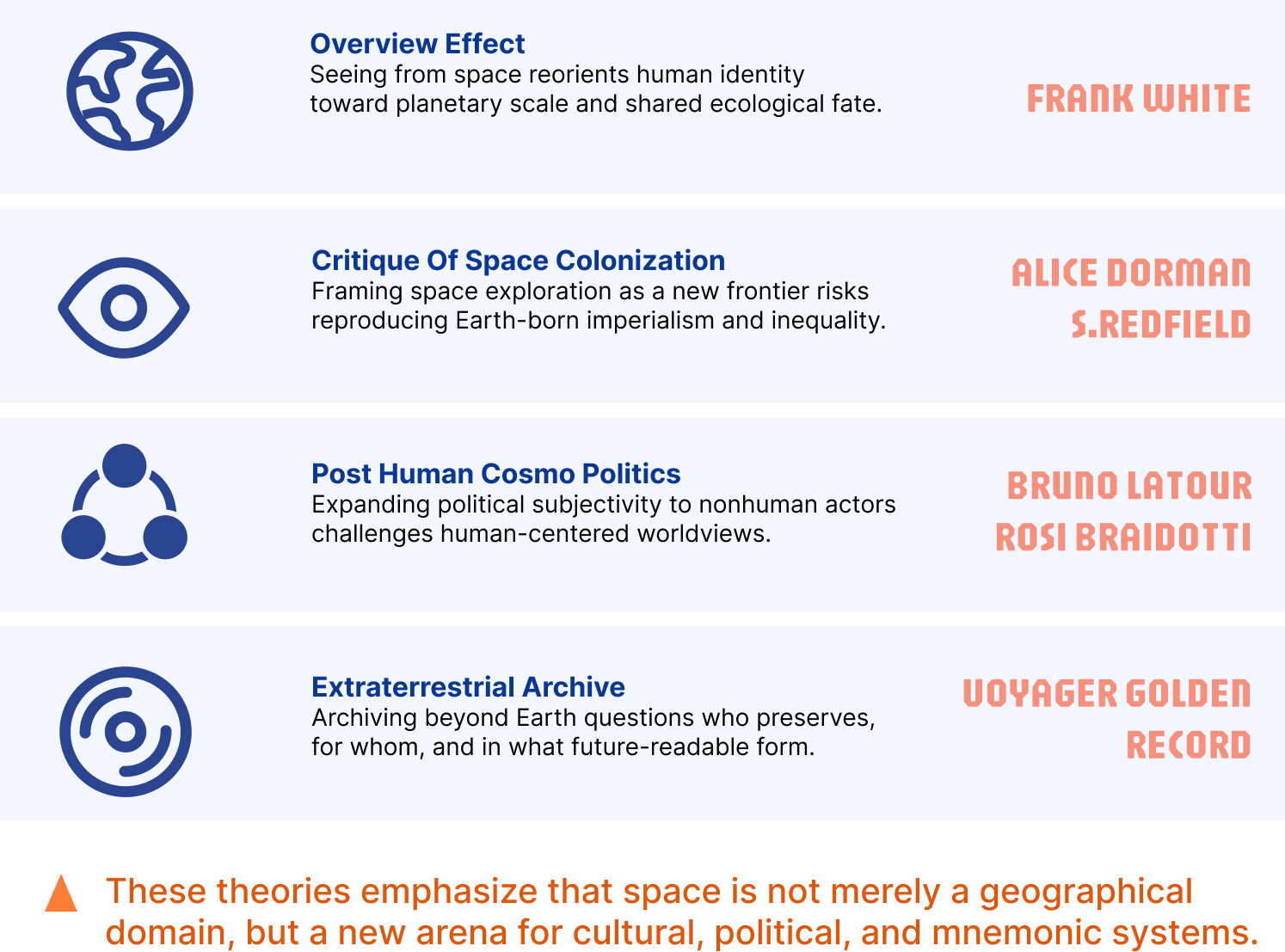
Theories such as Carl Sagan’s Pale Blue Dot and Frank White’s Overview Effect have shifted our view from anthropocentrism to a cosmic perspective.Space is no longer merely a physical frontier but a site of psychological and philosophical transformation.
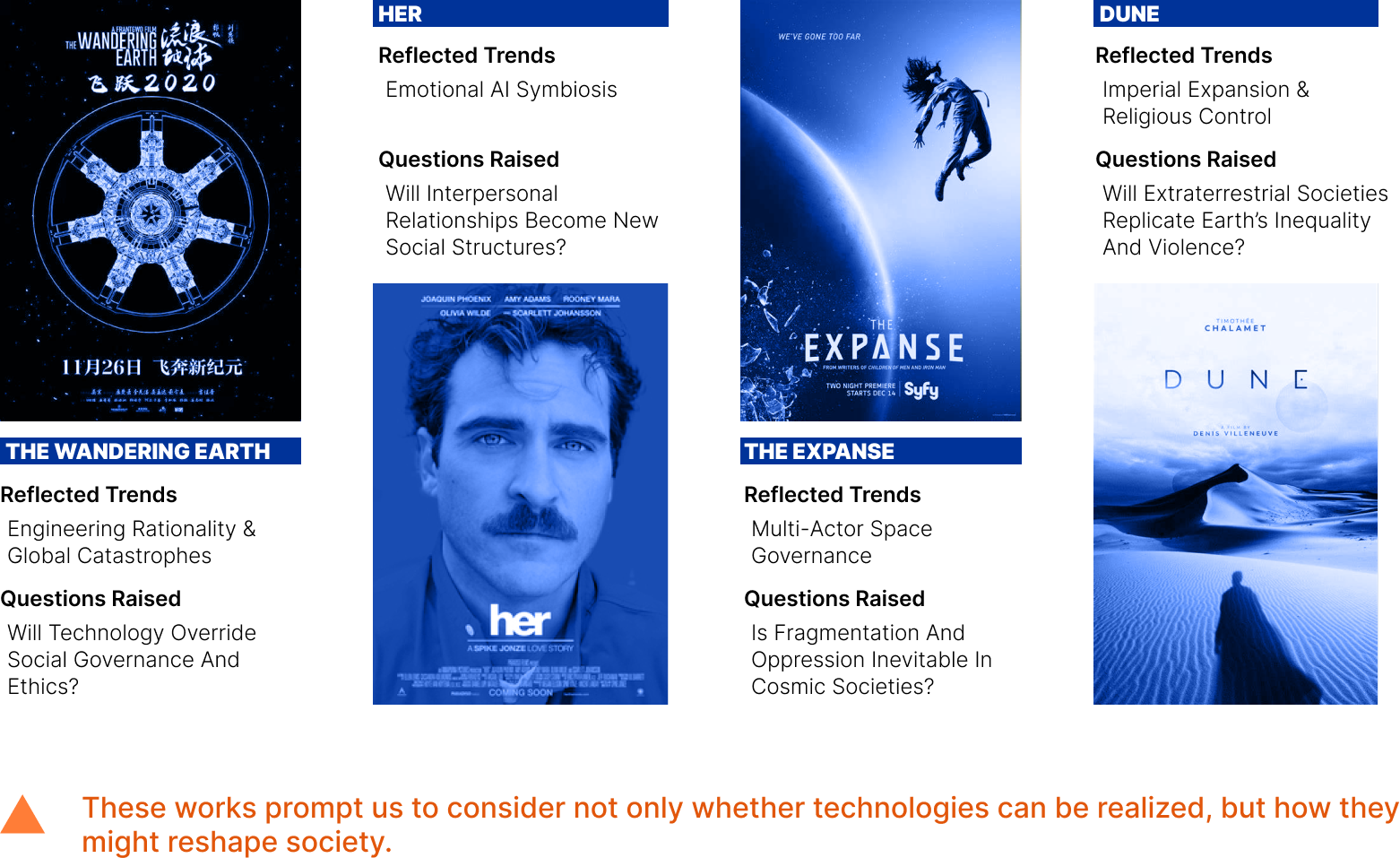
Future Visions in Contemporary Science Fiction
RESEARCH
Deep Space Exploration & Transformation
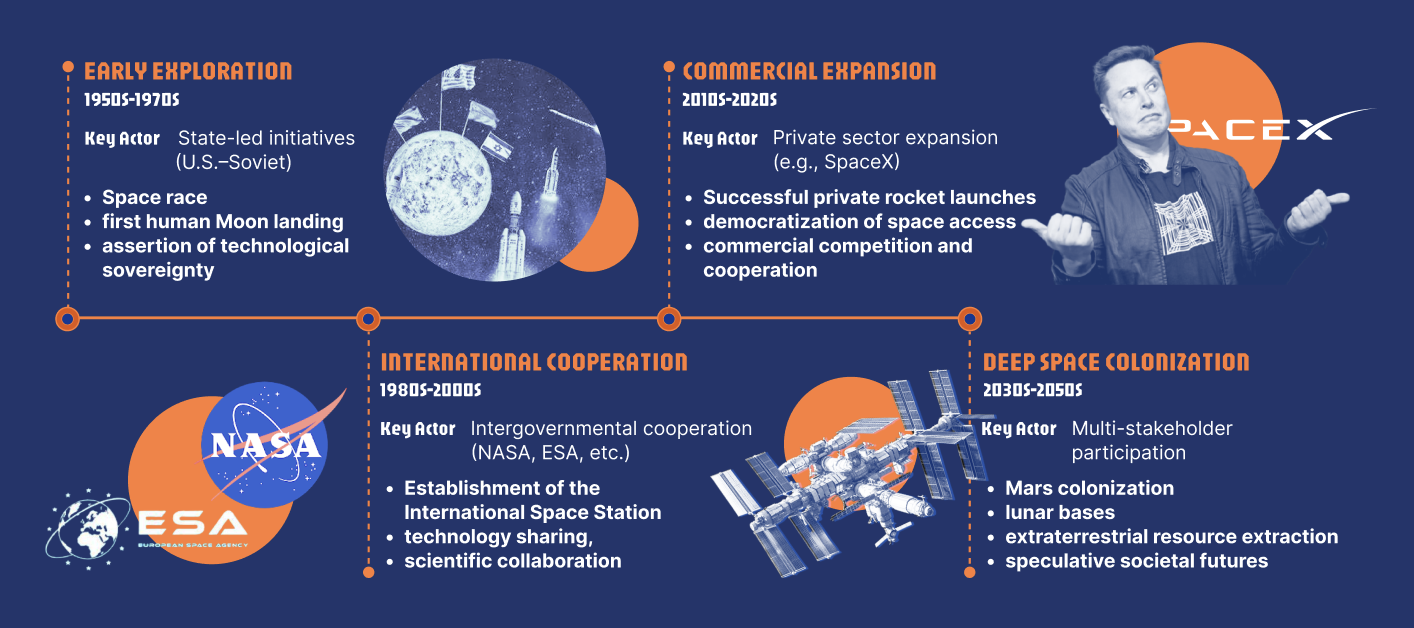
Drawing from technological progress and shifting political-economic frameworks, the evolution of deep space exploration can be broadly categorized into four phases—each shaped by distinct driving forces and institutional logics.
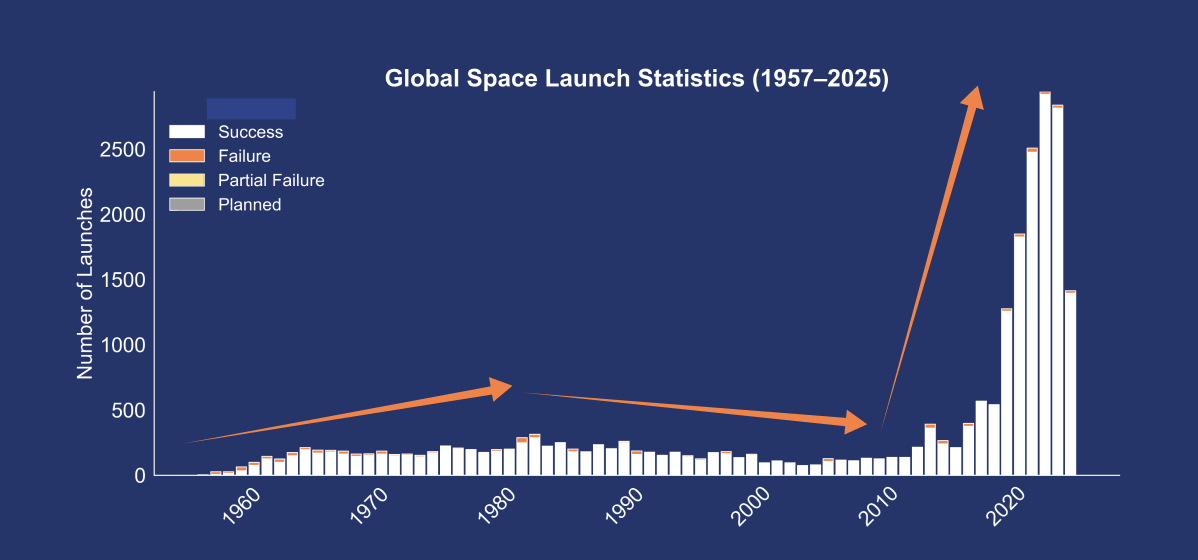
Between 1995 and 2020, launch frequency declined—driven by the post–Cold War slowdown of the space race, lack of mature commercial players, safety incidents, and technological transition.
The emergence of SpaceX and similar companies reversed this trend through lower costs and higher launch cadence. Post-2020, a sharp rise in commercial missions reflects a new model: state-led policy combined with private-sector acceleration.
Theoretical Perspectives
Information Storage Media
In the context of deep space and future societies, how information is stored, interpreted, and transmitted has become a political issue. Traditional text- or code-based systems rely on human language and energy environments—both unstable in space. To enable longer-term, decentralized storage, researchers are exploring non-human media.
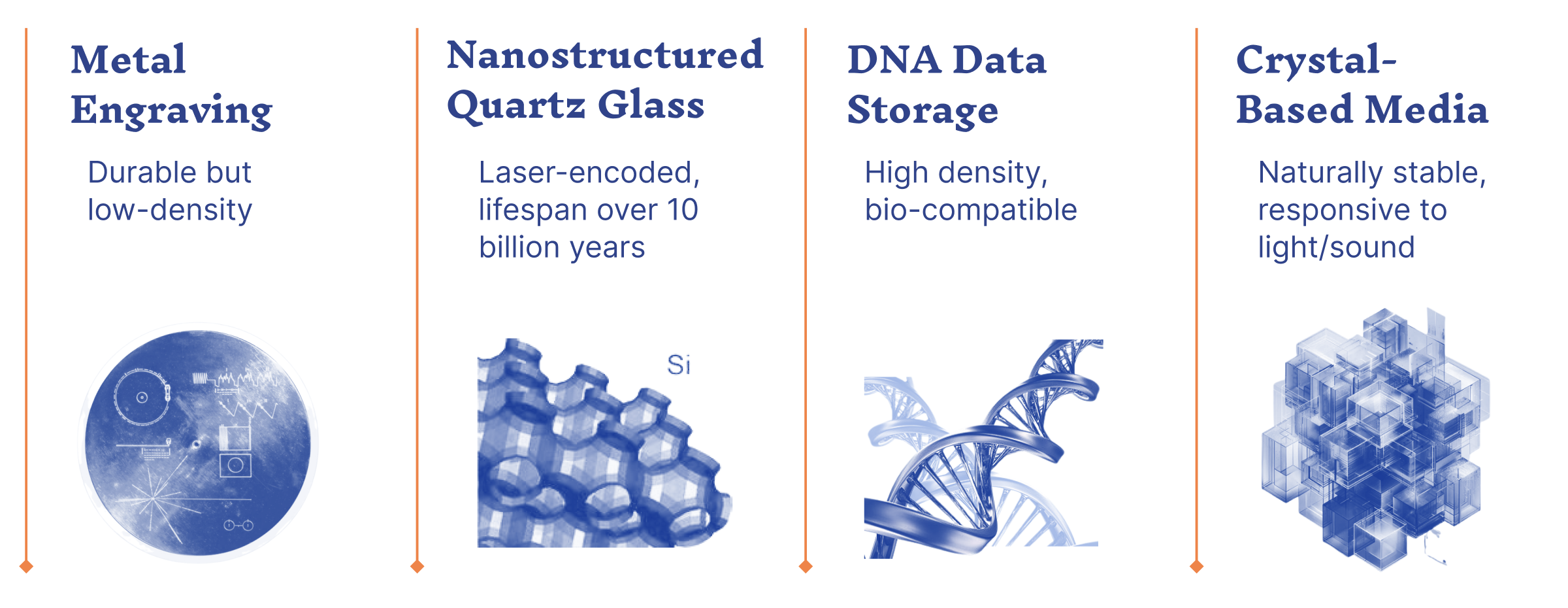
Crystals are gaining renewed attention as information media due to their intrinsic properties:
Structural Encoding: Molecular lattice as natural codeSensory
Responsiveness: Generates signals via light, heat, or pressure
Post-Linguistic Expression: Convey data via wave, light, form, sound
Embedability: Miniaturized, device-integrated, independent of digital grids
These traits suggest that crystals could become perceptual media in future societies—interfaces for communication between humans and nonhumans. In this view, crystals are no longer inert minerals butsensory portals in a post-linguistic world.
PROJECT
As deep-space exploration becomes a long-term condition, human life begins to lose a shared sense of memory and presence. Everyday activities and emotional traces no longer leave obvious or lasting marks.
This project looks at how material forms might carry human traces when conventional records become insufficient—how memory could be felt, encountered, and kept, rather than simply stored.
Over time, such materials may evolve into intelligent matter, where recording becomes ambient rather than intentional. In this scenario, human civilization could be preserved in a new state—one where human will is no longer the sole author of its own history.
part I

Crystal Record
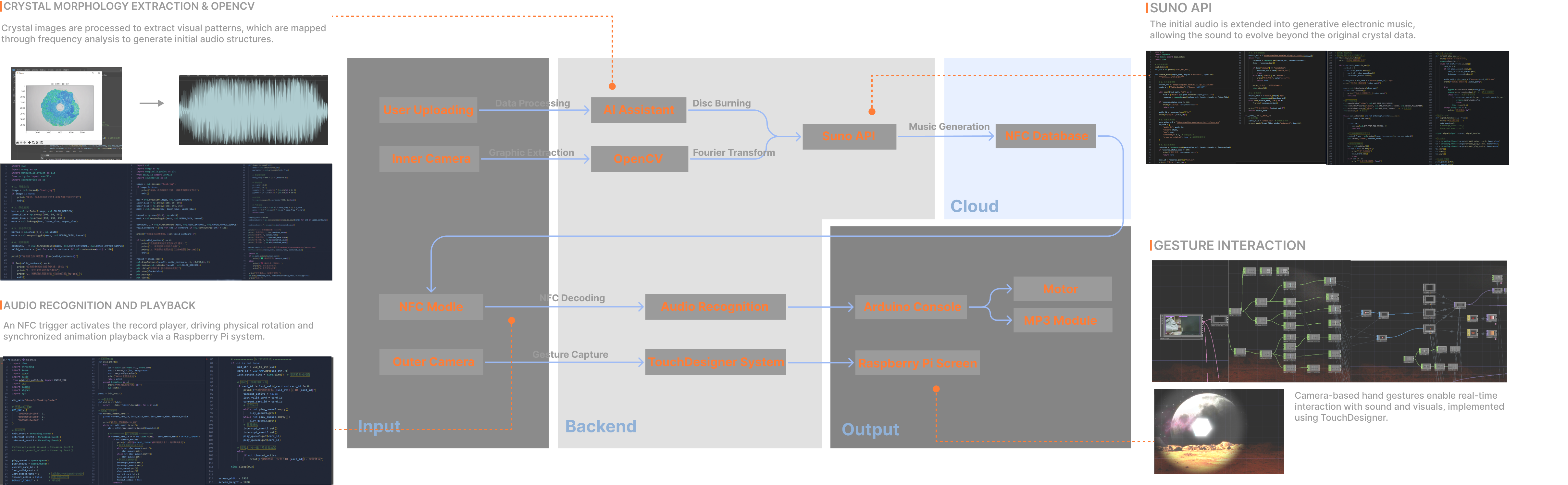
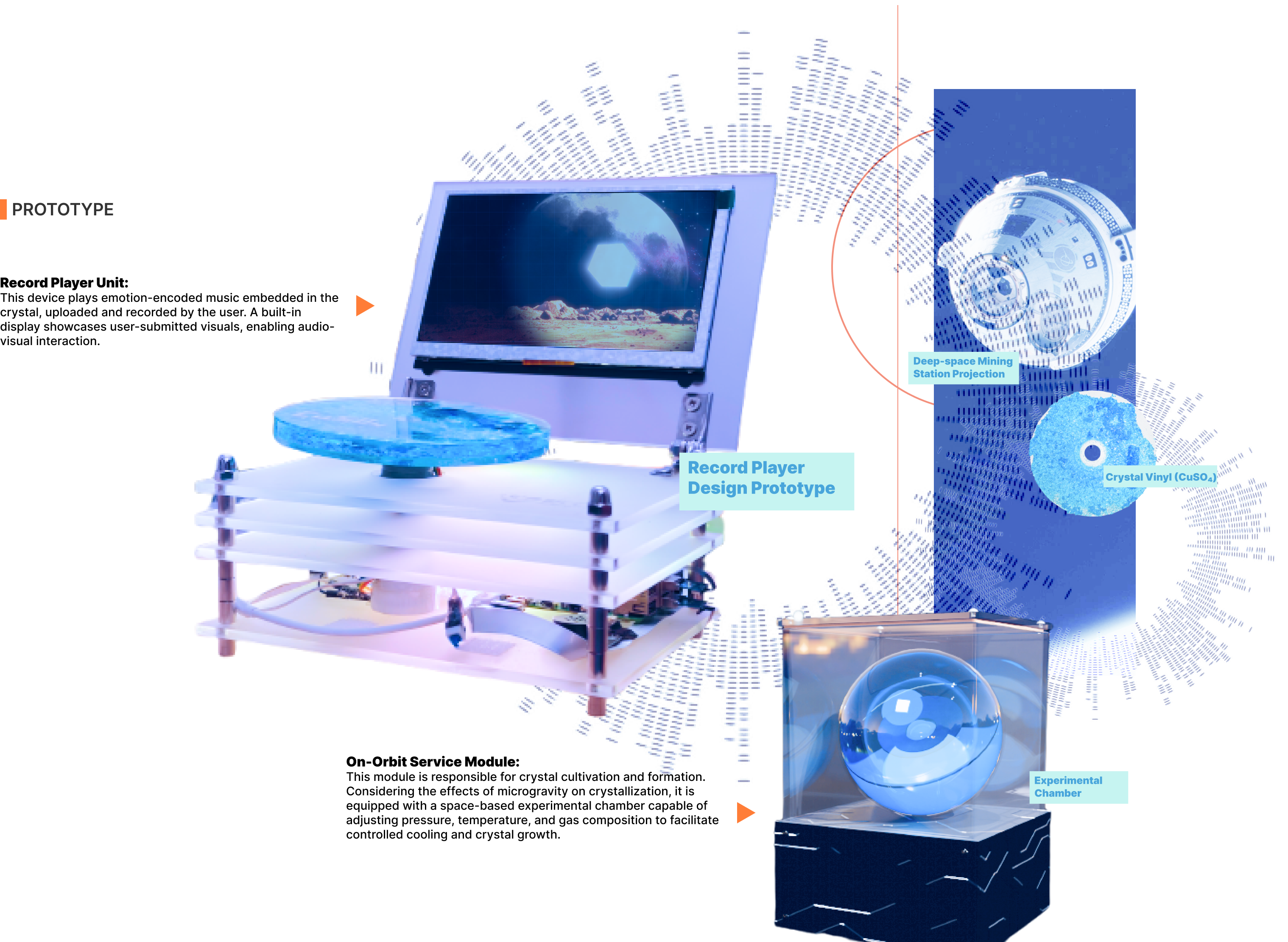
Crystal Records are public artifacts inspired by vinyl records. Collective human activities and emotional states are encoded into crystal discs and played through sound and visual resonance.
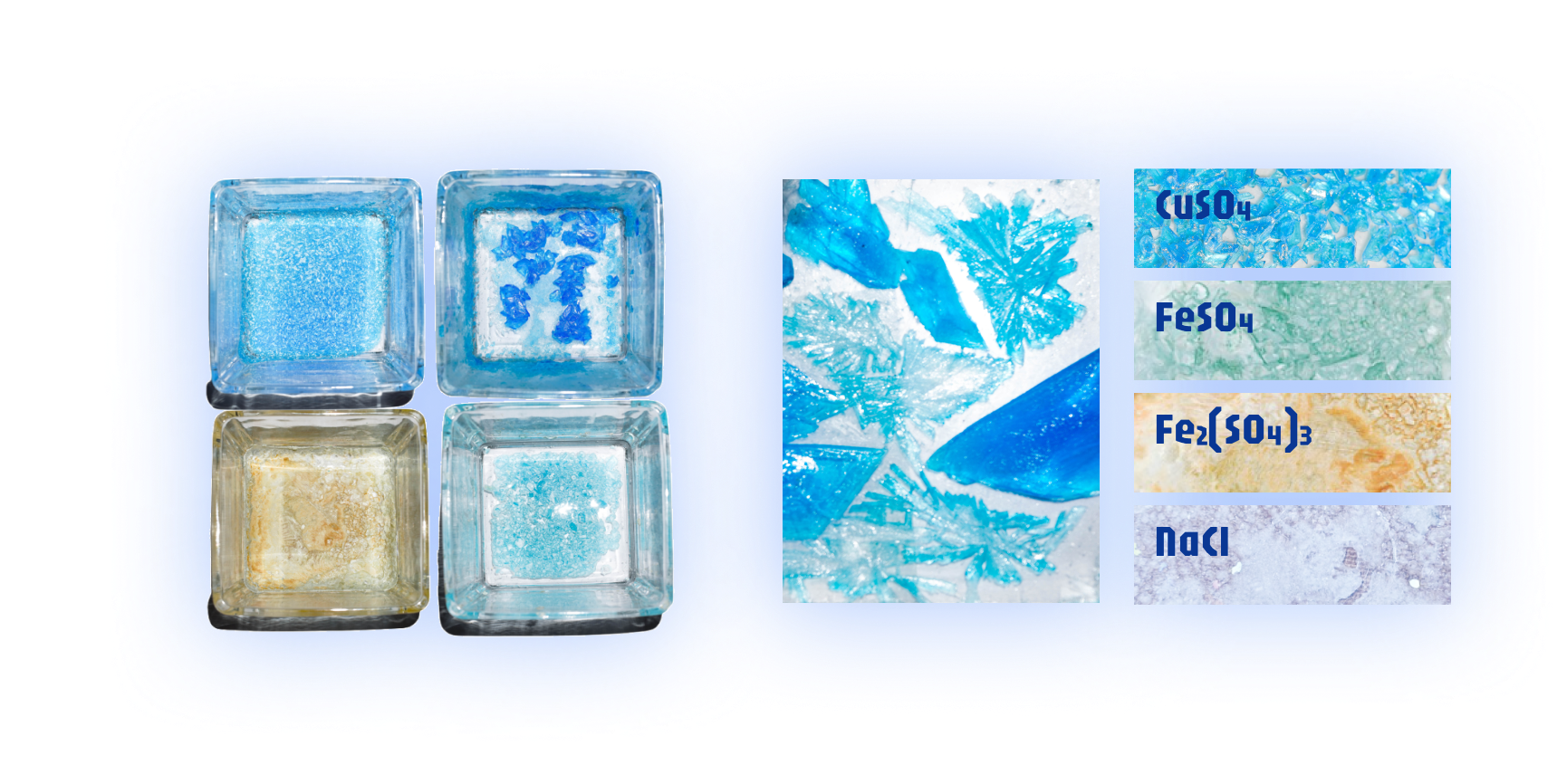
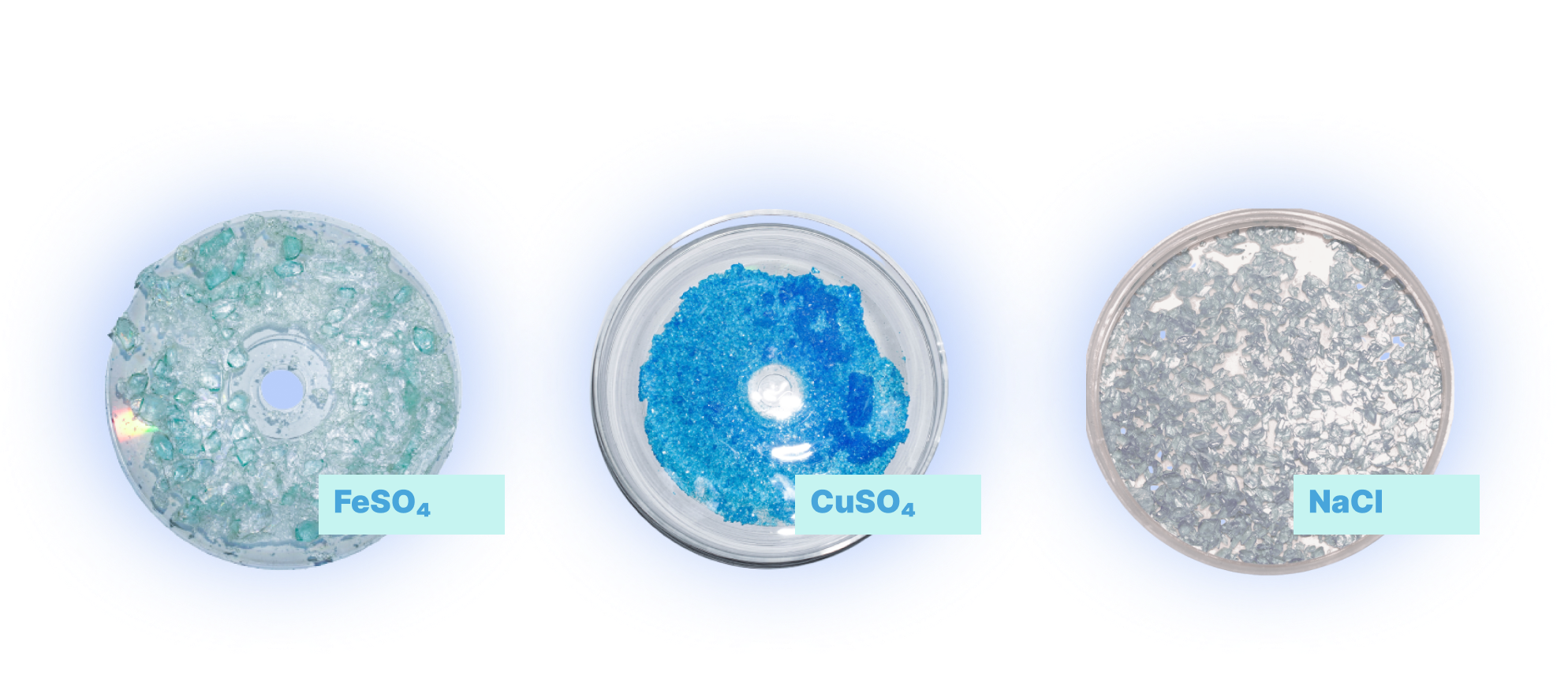
To assess the feasibility of crystal records, we conducted multiple rounds of material testing. Sulfate and silicate crystals—commonly found and easily accessible both on Earth and in space—were selected for evaporation-based crystallization experiments.
After repeated trials, we identified CuSO₄, FeSO₄, and NaCl as stable crystalline materials suitable for record fabrication. The prototypes were created using resin encapsulation techniques.
part II
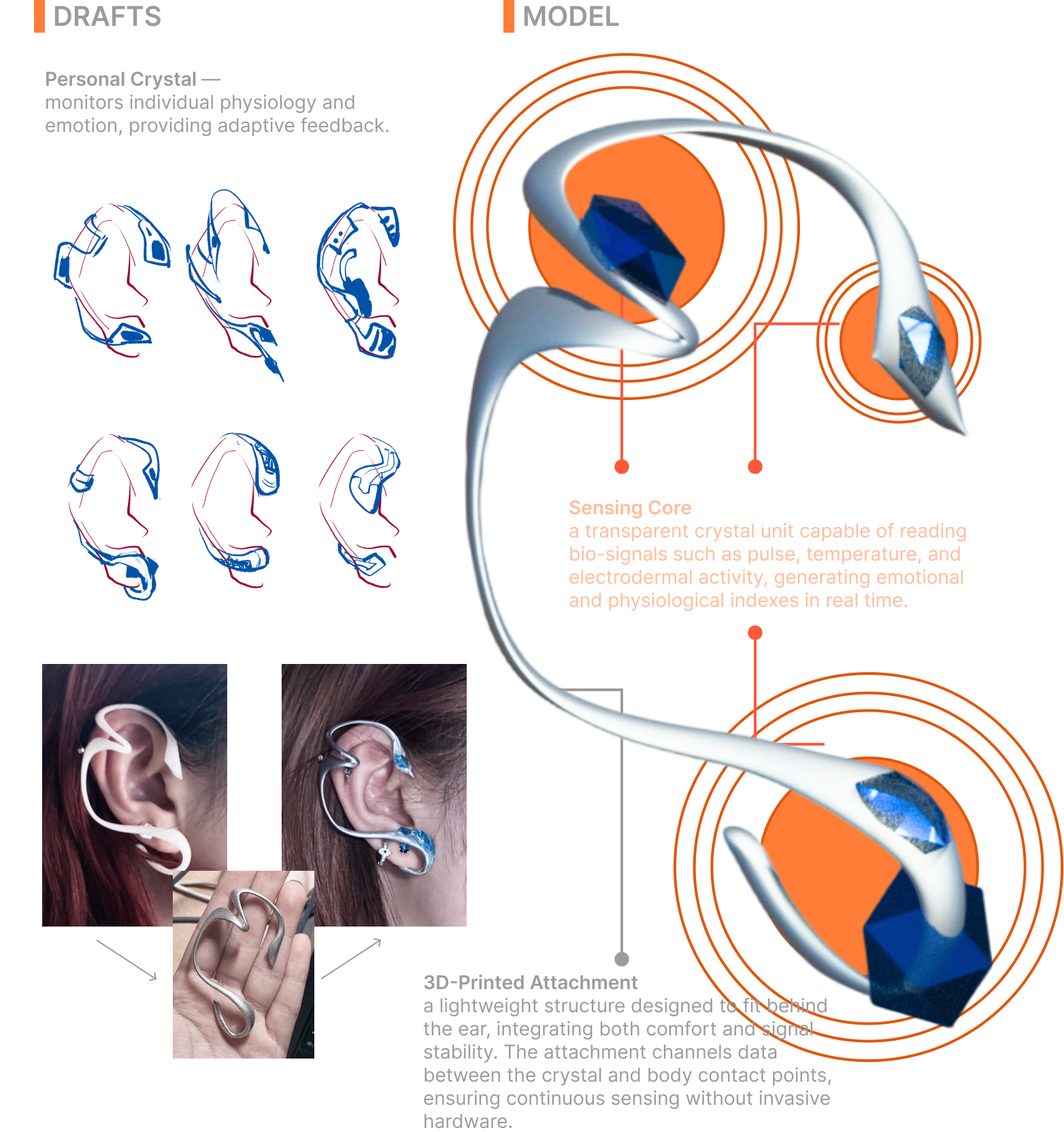
Personal Crystal
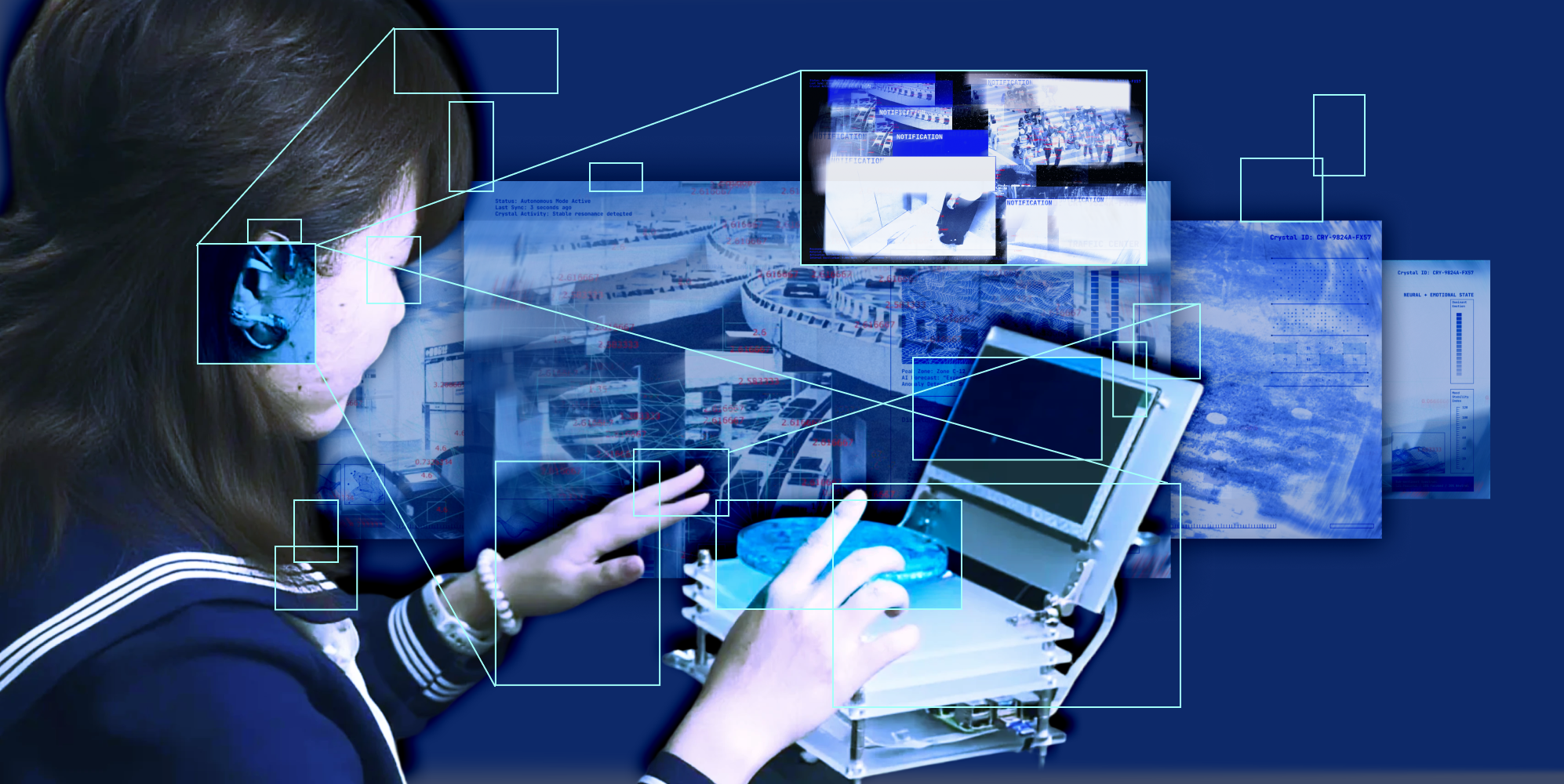
As space living becomes generational, memory shifts from public display to private keeping.Personal Crystals store long-term emotional and behavioral traces of an individual. They change slowly over time and are meant to be kept, not read or optimized.
They function as:
private memory objects
material traces of lived experience
identity anchors in deep space